SHOT GUIDE · WATERFALLS
Tukad Cepung: how to get the light beam shot
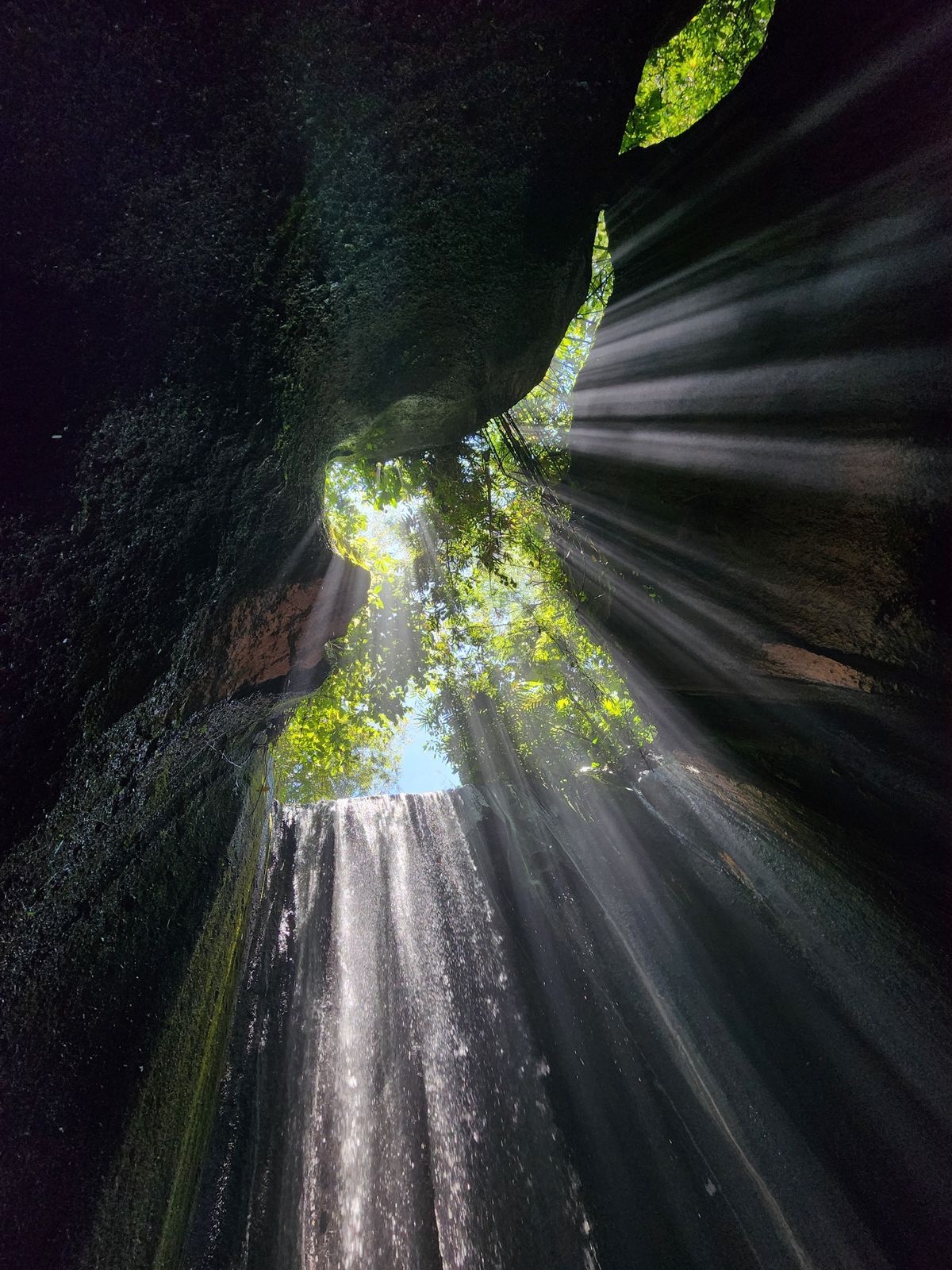
See that light? It shows for about two hours on a clear morning. Here's when to go, what it costs in 2026, where to stand, and the gear that gets it.
That photo is the reason people drive an hour from Ubud before breakfast. Tukad Cepung is a waterfall inside a cave, and for about two hours on a clear morning the sun drops through the roof in solid beams. Stand in the light and you get the kind of picture you keep on a wall. Turn up late, or on a grey day, or with only a phone, and you get a dark cave. Here's how to come home with the shot.
Is it worth the drive?
Yes, on a sunny dry-season morning. The walk in is part of it: stone steps down through jungle, then a shallow river through a narrow canyon, then the cave opens and the fall is in front of you with light coming through the ceiling.
Skip it if the sky is grey. No sun means no beams, and without the beams it's a small waterfall in a dark cave. Skip it right after heavy rain as well. Local guides warn the river above the fall can rise fast, and the mossy rock gets slick. And if stairs are a problem, know that there are roughly 150 to 200 of them, and you climb every one on the way out.
The shot
There are really two shots here, and they want different gear.
The beam photo. A person small in the frame, standing in the light at the base of the fall, cave walls dark around them. Photographers who have shot it point to one spot: just past the large boulder before the final chamber, shooting towards the fall. The other version puts your subject on top of that boulder looking up, with you shooting from below.
The walk-in video. Wading the canyon with water to your shins, walls closing in, then the reveal as the cave opens. This is the clip people actually rewatch, and it's the one a phone handles worst: low light, wet hands, water dripping from the roof.

When to be there
Every recent guide agrees on the window: the beams show between about 9 and 11 in the morning, on clear days, in the dry season (roughly April to October). One photographer puts the best light a little earlier, 8 to 10. A visitor who timed it saw the rays start just before 10.
The catch is that everyone else knows this too. Crowds build from 10, tour groups arrive around midday, and people queue for the beam spot. One write-up counted a ten minute wait by 10:30. So the plan that works: leave Ubud by 8, be at the ticket desk before 9, and be standing in the cave when the first beam appears. You get the light and a mostly empty frame.
Rules and cost
| Entry fee | Rp 30.000 per person, cash only. Write-ups from 2019 and 2023 list Rp 10.000 to 15.000, so ignore older numbers 2 |
|---|---|
| Parking | Free at the entrance. One source mentions Rp 2.000 to 5.000 1 |
| Opening hours | 07:00 to 18:00, daily 1 |
| From Ubud | About 30 km, 40 to 60 minutes by scooter or car 3 |
| The walk in | 15 to 20 minutes: about 150 to 200 stone steps, then a shallow river through the canyon 2 |
| Water depth | Ankle to knee, depending on recent rain 2 |
| Light beams | About 09:00 to 11:00 on clear days, dry season 1 |
| On site | Toilets, plus small warungs on the stairway selling food, drinks and young coconuts 2 |
Last checked 20 September 2026. Fees in Bali change often and differ between gates, so carry cash and treat these as a guide.
None of the sources we checked lists a camera fee, a tripod rule or a drone rule for Tukad Cepung. A drone is pointless here anyway: the fall is inside a cave. For the rest of Bali, our drone rules guide has what the Indonesian sources actually say.
Gear for the beam photo
The cave is dark and the beam is bright, which is the hard part. A phone will either blow out the beam or turn the cave to mush. A full-frame camera holds both. The photographer's tip for this spot is a 24-70mm: the space is tight, so you don't need anything wider, and the zoom lets you reframe without moving your feet on wet rock.
Starting points, to adjust on the day:
- Expose for the beam, not the cave. Let the walls go dark. You can lift shadows later, you can't recover a blown beam. Shoot RAW.
- Handheld: around 1/60 of a second, aperture wide open, and raise the ISO until it works. The cave needs it.
- For silky water: a quarter to half a second on a tripod. One visitor noted there isn't much room to set one up once people arrive, which is another reason to be early. If it's already busy, brace the camera on a rock.
- Wipe the lens between frames. Every photographer who writes about this place mentions the mist. Bring more lens cloths than seems reasonable and keep one dry in a pocket.
Capture the whole memory: the creator kit
The photo is one second of the morning. The part you'll want to relive is the rest of it: wading the canyon, the walls closing in, the moment the cave opens. If you make content, that walk is your whole reel. If you don't, it's still the clip you'll show people at home.
That's action camera territory. You're wading, water drips from the roof the whole way, and you want both hands free. An action camera shrugs off the water, handles the jump from bright jungle to dark canyon, and sits on a chest or wrist mount so the footage looks like what you saw.
If you would rather decide the angle afterwards, a 360 camera on a stick gets the whole canyon in one pass, and you pick the framing in the edit.
The morning, start to finish
Leave Ubud at 8 with cash in small notes. Pay at the desk, take the stairs down, Film the wade in on the action camera. At the boulder, set up the beam shot before the queue forms, shoot it, wipe the lens, shoot it again. You'll be climbing back out by 10:30, which is when most people are arriving. There's fresh coconut on the stairway and you'll have earned it.
You'll probably only come here once. It's a lot of stairs and an early start for a photo, so it's worth bringing a camera that can actually see in the dark.
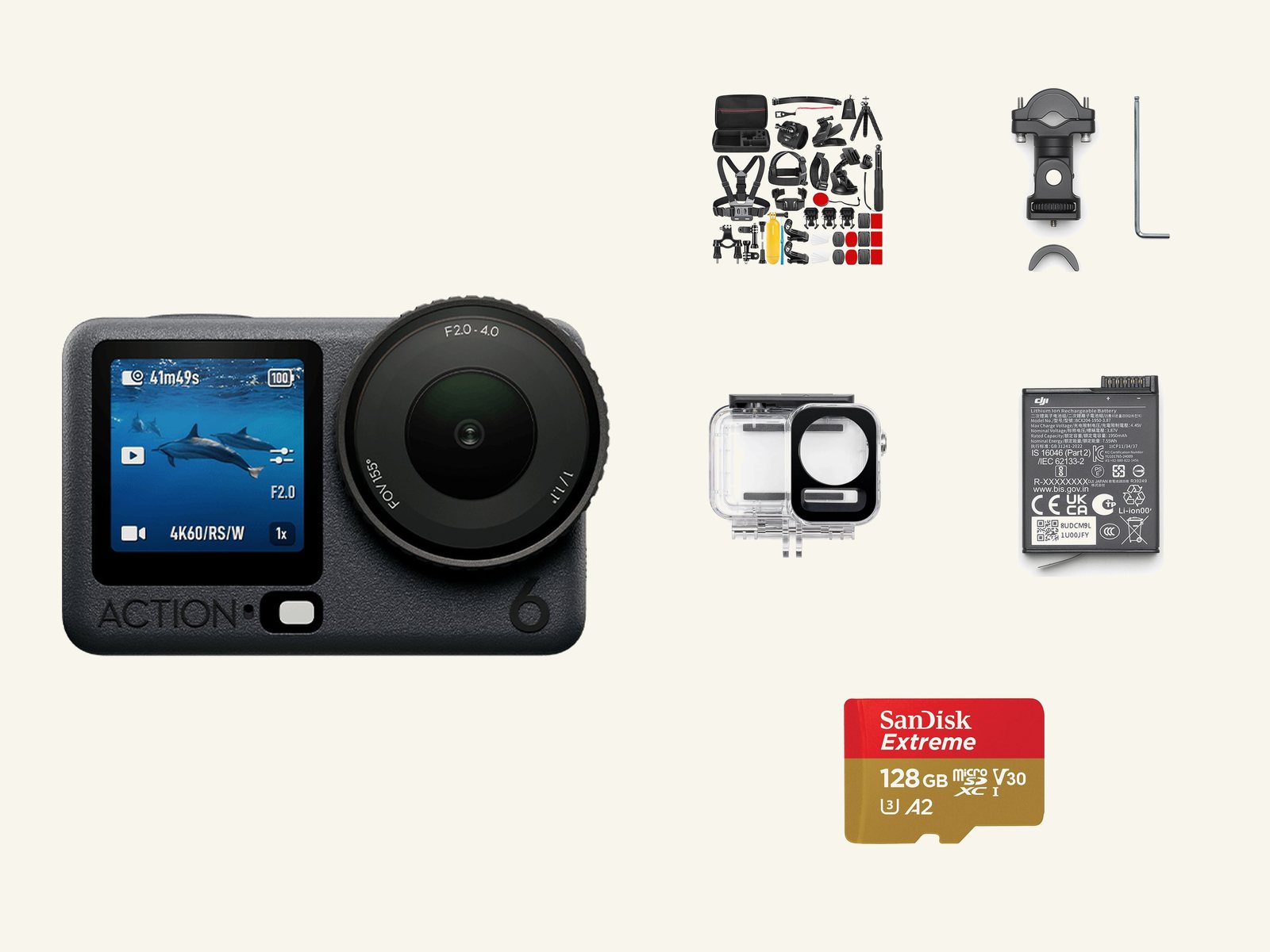 The Go Bag for this dayThe Adventure Creatorfrom Rp 325.000 a day, delivered to your villaAction camera, mounts, dive case, spare batteries and a 128GB card in one case.See what is inside →
Quick answers
What time are the light beams at Tukad Cepung?
About 9 to 11 in the morning, on clear days in the dry season (roughly April to October). Arrive before 9 to beat the queue for the beam spot. On a cloudy day there are no beams.
How much is the entrance fee at Tukad Cepung in 2026?
Rp 30.000 per person, cash only, with free parking. Older guides that list Rp 10.000 or Rp 15.000 are out of date.
Can I use a tripod at Tukad Cepung?
No source lists a rule against it, but the cave is small and there's little room to set one up once the crowd arrives. Get there before 9 if you want a long exposure, or brace the camera on a rock.
Is Tukad Cepung safe in the rainy season?
The path gets slippery and the river can rise quickly after heavy rain upstream. Avoid it right after heavy rain, and follow what the staff at the entrance tell you.
What camera is best for Tukad Cepung?
For the beam photo, a full-frame camera with a 24-70mm lens handles the dark cave and the bright beam together. For the walk in through the river, an action camera on a chest or wrist mount, because everything gets dripped on.
Sources
- Bali Holiday Secrets: Tukad Cepung Waterfall, entrance fees, hike and tips (updated 5 September 2026)
- Ubud Center: Tukad Cepung Waterfall, entrance fee and best time (updated August 2026)
- Finns Holidays: Tukad Cepung, complete guide for 2026
- Haley Blackall (photographer): Ultimate guide to Tukad Cepung Waterfall, lens, settings and where to stand (updated January 2023)
- Hotels and Hand Luggage: Tukad Cepung guide, timing of the rays, queue, dripping cave, room for a tripod (August 2019)