SHOT GUIDE · UBUD AFTER DARK
Filming the Ubud Kecak fire dance
Firelight only, no flash, no tripod, and a crowd by 7. Here's where to sit, when to arrive, what it costs in 2026, and the fast lens and full-frame body that hold up in the dark.
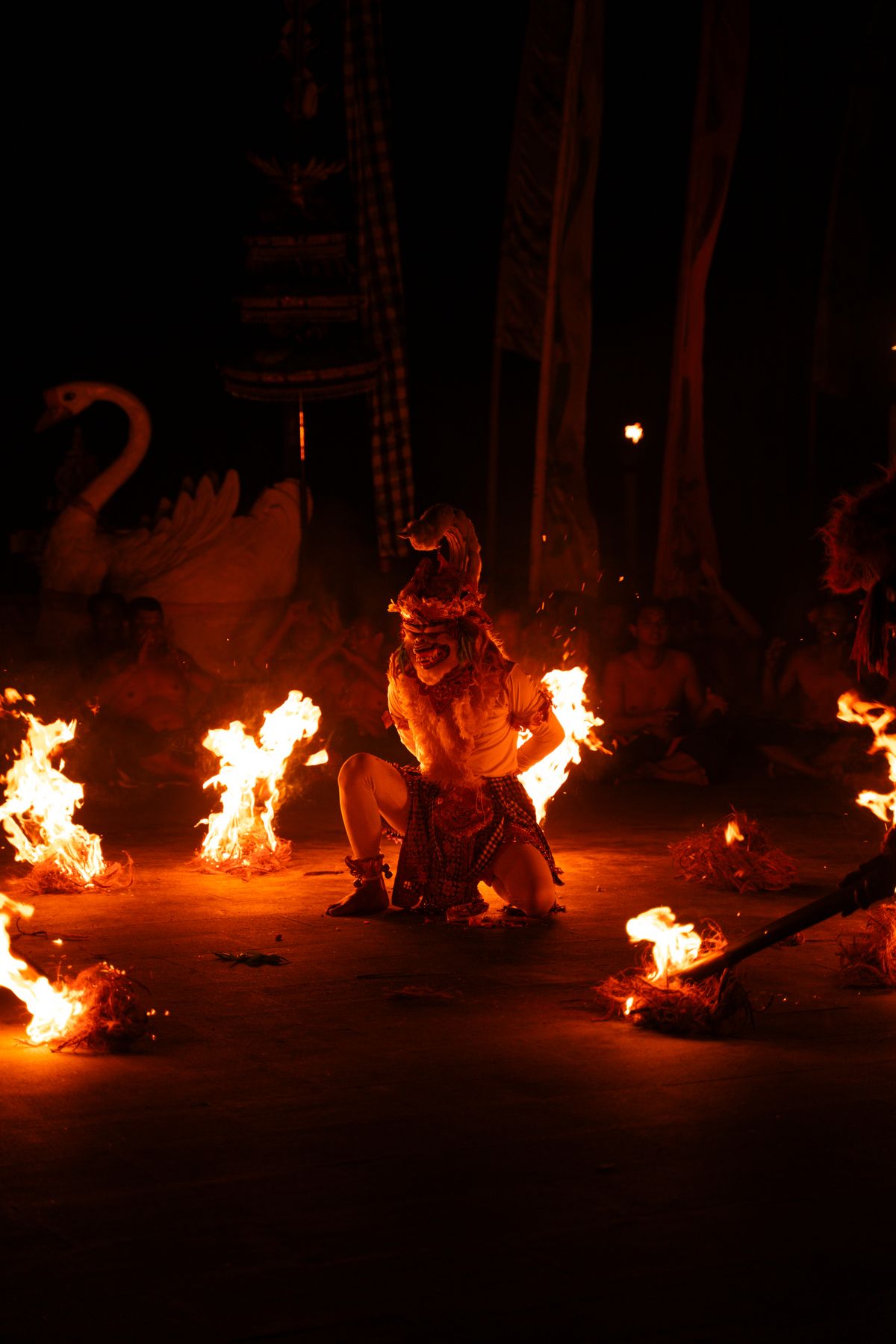
One dancer, a ring of fire, and fifty men chanting in the dark. That's the frame everyone wants from the Ubud Kecak, and it's lit by nothing but flame and a lamp at the centre of the floor. No flash is allowed, there's no room for a tripod, and the show starts at 7:30pm, well after the sun is gone. Most people point a phone at it, blow out the fire, lose the faces, and go home with an orange smear. The shot is there if you bring a camera that can see in the dark.
Is it worth a night in Ubud?
Yes, if you want one ceremony you're actually allowed to film. The Kecak has no gamelan and no instruments: the whole soundtrack is the human voice, a circle of men chanting "cak-cak-cak" in waves while dancers act out the Ramayana, building to a fire scene with burning coconut husks. It runs about an hour and it's happening a short walk from the middle of Ubud, not an hour's drive away. Ubud Palace puts on a different dance every night in its courtyard, and a few temples run the Kecak and fire version on set nights.
Skip it if you need a comfortable, quiet seat: the benches are hard and the good rows go early. Skip it if your plan depends on a tripod, because there's nowhere to put one. And if you've already seen the famous sunset Kecak on the cliff at Uluwatu, know that Ubud is a different thing. There's no ocean and no golden light here. It's a temple courtyard after dark, closer and more intimate, and the light is firelight only.
The shot
There are two frames worth planning for, and they want different things from you.
The firelit portrait. A single dancer pulled out of the black, fire below or behind them, the chorus a blur of arms around the edge. This is the one a fast lens is built for: open the aperture, let the background fall to nothing, and the flame does the lighting for you. You shoot it from your seat, so reach matters.
The chorus wide. The full circle of chanters, hands up, lit by the torches they pass between them. For this you want to be low and close to the ring, and wide enough to get the whole circle in. It's the shot that explains what the Kecak actually is.

When to be there
Shows start at 7:30pm across the Ubud venues. That's the number that matters, and it's after dark, so forget any idea of golden hour during the performance. The useful early window is dusk, roughly 6:45 to 7:15, when you arrive. There's still a little light in the sky then for a shot of the temple gate, the men filing in, and the crowd settling, before the courtyard goes fully black and it's flame and lamp from there on.
Get there by about 6:45pm. Seating is unassigned bench rows, so the front fills first, and the front is where your fast lens earns its keep. Later arrivals end up at the back behind a wall of raised phones. One more thing worth knowing: at the smaller temples the show can be postponed if ticket sales don't cover the cost that night, so it's not a bad idea to confirm at your villa which venue is running.
What does it cost, and can you film it?
| Ubud Palace performance | Every night, starts 7:30pm, about 90 minutes 3 |
|---|---|
| Kecak and fire dance, Pura Dalem Taman Kaja | Wednesday and Saturday, 7:30pm 4 |
| Ticket, most venues | Rp 100.000 per person; ARMA Museum about Rp 150.000 1 |
| Ticket, Taman Kaja Kecak | Rp 75.000 per person, can change without notice 5 |
| Flash | Photos and video are allowed, but not with flash 3 |
| Tickets | Bought at the gate, or from sellers on Jalan Raya Ubud after 5pm, same price 3 |
| Arrive by | About 6:45pm for a front seat and the best photos 3 |
| If the crowd is small | The show can be postponed if ticket sales don't cover the cost 4 |
Last checked 18 October 2026. Fees in Bali change often and differ between gates, so carry cash and treat these as a guide.
The one rule every source agrees on is no flash. Photos and video are fine, but a flash kills the firelight you came for and distracts the performers mid-chant, so turn it off on the camera and the phone. No fetched source we could quote bans tripods outright, but the seating settles it anyway: there's no room, and you'd block the row behind you. A drone is a non-starter inside a temple courtyard at night. For the rest of Bali, our drone rules guide covers what the Indonesian sources actually say.
Gear for the portrait you'll frame
The hard part is simple to state: the scene is almost black, and a flash is off the table. That rules out a phone and most kit zooms, which run out of light and turn the dancers to mush. What works is a camera with a big sensor that stays clean at high ISO, and a lens that opens up wide to let the fire do the lighting. One photographer shooting the Kecak got a usable, print-quality frame at ISO 6400, f/2.8, 1/400 of a second. With a faster lens you can pull that ISO down and keep it cleaner.
Starting points, to adjust on the night:
- Open the aperture all the way, around f/1.8. In this light you need every bit of it, and the shallow focus throws the dark background cleanly away.
- Shutter for the movement. Around 1/250 of a second freezes the chant and the dancers' hands. If you want the flames to streak and smear, drop to about 1/60 and brace hard.
- Raise the ISO until it's bright, then stop worrying about it. Noise you can clean up later; a dark, blurry frame you can't. Shoot RAW.
- Expose for the face, not the fire. The flames are the brightest thing in the frame and will fool the meter. Spot meter on a dancer so they don't go to silhouette.
- Brace, don't balance. Elbows on knees, camera pulled into your face. It's the tripod you're allowed to bring.
Renting the body and a fast prime for one night beats carrying full-frame glass through three airports for a single show. Our Sony lens rental page lists the fast primes, and the camera rental page has the bodies they fit.
To film the chant handheld
The sound is half the memory. Fifty voices moving in a wave is something a still can't hold, so a lot of people want video too, and video in this light without a tripod is where phones fall apart. A stabilised pocket gimbal camera with a bright sensor handles it: the gimbal smooths out your handheld shake, and the larger sensor keeps the firelit footage from turning to noise.
Keep clips short and let the camera settle before each one. If you brought the A7 IV for stills, it shoots this footage too; the pocket camera just means you don't have to choose between the photo and the clip. Ubud has plenty of other daytime scenes to point it at, and our Monkey Forest guide covers the one down the road where you have to watch your gear around the monkeys.
The evening, start to finish
Check which venue runs tonight and leave with cash in small notes. Walk over for about 6:45pm, buy a ticket at the gate, and take a front bench while there's still a little dusk light for a few establishing frames of the gate and the crowd. When the chorus files in and the lamp is lit, the courtyard goes black and the chant starts. Open your lens wide, meter on a face, and shoot the portrait and the chorus wide as the fire scene builds. You'll be walking back into Ubud by around 9, with an hour of firelight and fifty voices on your card. You only sit in that courtyard once, so bring a camera that can actually see it.
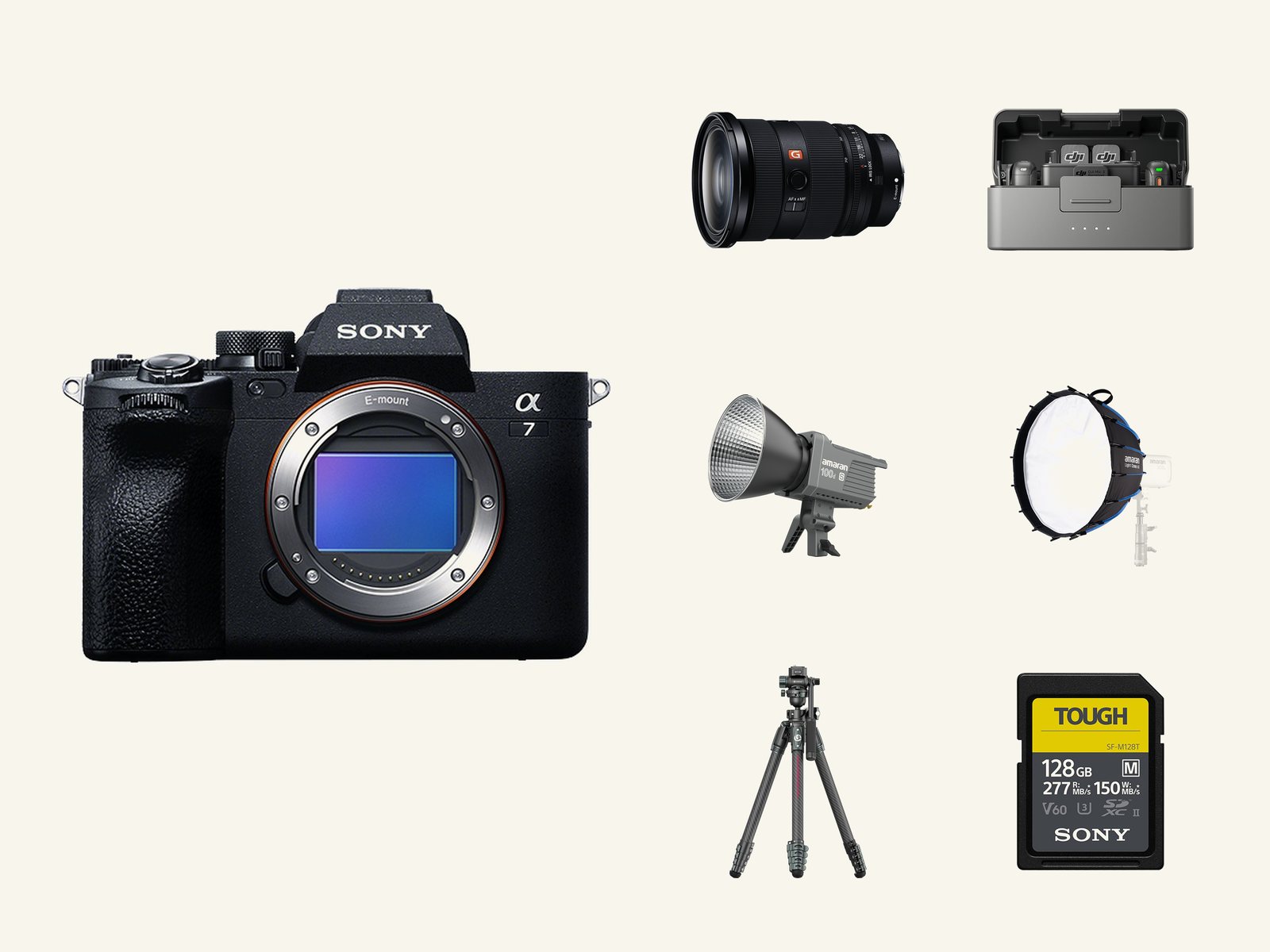 The Go Bag for this dayThe Pro Camera Kitfrom Rp 1.125.000 a day, delivered to your villaThe full-frame body and a fast lens, which is all the dark really asks for.See what is inside →
Quick answers
Can you take photos at the Ubud Kecak fire dance?
Yes. Photos and video are allowed, but no flash. The whole show is lit by fire and a central lamp, so bring a fast lens and a camera that handles high ISO instead of a flash that would ruin the light and disturb the performers.
How much is the Ubud Kecak fire dance in 2026?
About Rp 100.000 per person at most venues. One source lists Rp 75.000 at Pura Dalem Taman Kaja, and the ARMA Museum show is higher at around Rp 150.000. Cash, bought at the gate or from sellers on Jalan Raya Ubud after 5pm. Prices change, so carry small notes.
What nights is the Kecak dance in Ubud?
The Taman Kaja community runs the Kecak and fire dance at Pura Dalem Taman Kaja on Wednesday and Saturday at 7:30pm. Other temples and Ubud Palace run dances on the other nights, all starting at 7:30pm. Check the night at your villa, because the lineup moves.
Can you use a tripod at the Kecak dance?
There's no room. Seating is bench rows with no assigned seats, they fill up, and a tripod would block the people behind you. Brace your elbows on your knees and lean on a fast lens and high ISO instead.
What camera settings work for the Kecak fire dance?
Start wide open, around f/1.8. Use about 1/250 of a second to freeze the chant, or drop to 1/60 if you want the flames to streak. Then raise the ISO until the frame is bright enough, and expose for the dancer's face, not the fire.
Is the Ubud Kecak fire dance worth it?
Yes, if you want one real ceremony you're allowed to film, an hour of fifty voices and firelight. Skip it if you need a quiet seat, want to set up a tripod, or have already seen the sunset Kecak at Uluwatu and want something new.
Sources
- Base Bali Tours: Ubud Traditional Dance Performance Schedule 2026 (venues, nights, 7:30pm start, IDR 100.000, ARMA IDR 150.000)
- Ubud Center: Dance Performance Ubud Palace, show ticket and schedule (nightly 7.30pm to 9.00pm, IDR 100K, Kecak venues by night)
- Bali Holiday Secrets: Ubud Palace Legong Dance, showtimes and prices (2026) (7:30pm nightly, 1.5hr, IDR 100.000, arrive 6:45pm, photography and video without flash)
- Rafting Bali: Kecak Dance Ubud, performance location, schedule and price (Pura Dalem Taman Kaja Wed & Saturday, 19:00/19:30, IDR 100.000/150.000, show may be postponed)
- Bali Around: Kecak Fire & Trance Dance by Taman Kaja Community (Pura Dalem Taman Kaja, Wednesday & Saturday, 7.30pm, IDR 75.000, price can change)
- Veronika's Adventure: Kecak Fire and Trance Dance Ubud (avoid using flash photography to not disturb the performers, check video rules beforehand)
- Digital Photography School: Travel Inspiration Bali (Kecak fire dance shot at ISO 6400, 1/400s, f/2.8, noisy but usable)
- The Lens Lounge: Dance photography tips and camera settings (shutter at least 1/1000 to freeze movement, keep ISO low, dark events ISO 2000-3600 at 1/120-1/160)